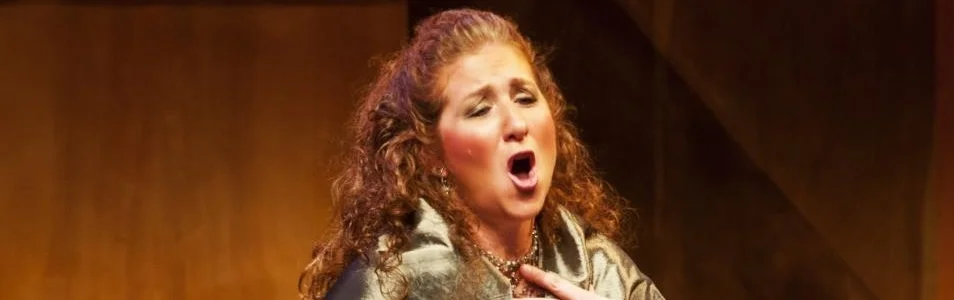
“Mattinata” by R. Leoncavallo

“The soloists were superb. Soprano Esther Heideman possesses a beautiful bell-like upper extension in her creamy voice and her joyous artistry pervaded the Cathedral. Even when she was not singing, her engaged stage presence radiated the sublimity of the music and its message...her fresh ornamentation was invigorating.”

“Ganymed” by Schubert
“Esther Heideman...was sweet and shimmering in the finale of Mahler’s Second Symphony with the NY Philharmonic”

“Another New Voice Teacher” by Gene Scheer
“Heideman’s arrival continued the ethereal feeling. She has bell-like, clear tone, easy on the vibrato, and perfect for the folk nature of the work. Her phrasing was simple and effective. Her demeanor, furthermore, radiated joy. Anyone left tearful by the slow movement had no choice but to respond to her warmth.”

“O Mio Babbino Caro” by Puccini
“Soprano Esther Heideman was the perfect Carolina, bold and assertive, yet simultaneously ladylike and elegant as well. Her lovely, honeyed voice was consistently a pleasure to hear. Her phrasing was elegant and her diction superb.”

“Tis the last rose of summer” by Thomas Moore
“The great Austrian’s Exsultate Jubilate Motet for soprano and orchestra is not an easy thing to sing, but presented no problem for Esther Heideman. Her lovely, beautifully placed voice soared through the long coloratura passages. The lyric middle passage was sung with real feeling, and the final Alleluia was done with total finesse.”